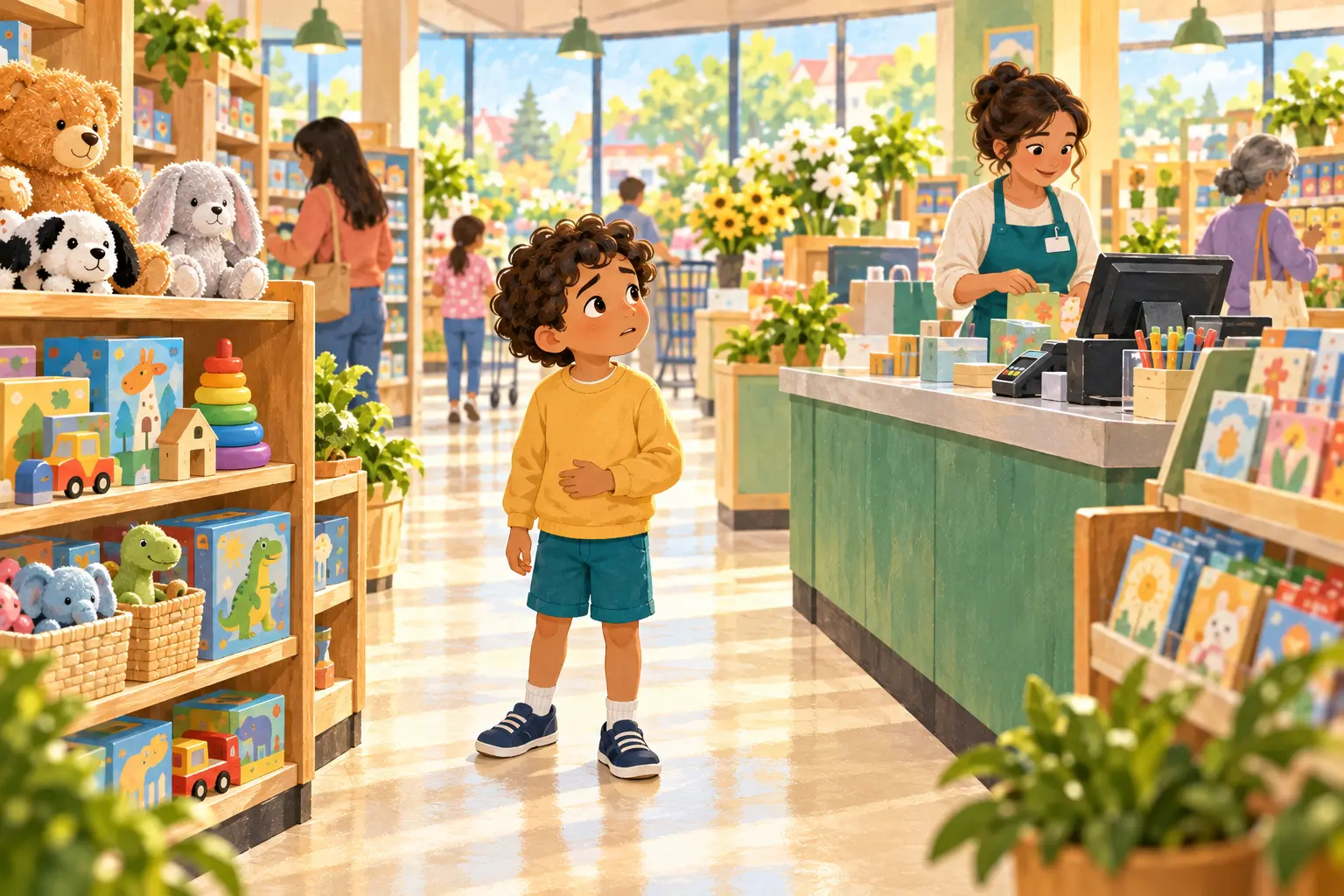
A short plan your child can practice
Before an outing, explain three actions: pause somewhere safe and visible, call for help, and ask an identifiable helper. Move away from immediate danger such as traffic; staying put is not a rule to remain in an unsafe spot. Adapt the plan to the venue and your child’s communication needs. Do not promise that knowing a rule prevents separation.
Identify helpers before you need them
At the entrance, point out a staffed counter or information desk. Talk about a store employee with a name badge, a uniformed police officer, or a parent accompanied by children if staff are not available. NCMEC’s KidSmartz guidance explains that some unfamiliar adults can help and that blanket “never talk to strangers” messages can get in the way of asking for help. A friendly appearance alone is not proof of safety.
Give your child one useful sentence
Try: “I cannot find my grown-up. Can you help me?” Practice the sentence without requiring a perfect performance. If speech is difficult, prepare a card your child can show to a helper. A trusted adult’s contact number can be included on a private card or wristband; do not post the child’s personal details online. Knowing a number from memory is useful for some children, but a backup matters.
Explain what not to do next
Discuss not leaving the venue, going to a car or accepting a ride from an unfamiliar person. Ask a helper to contact the grown-up while the child remains in a public, visible area. If anyone tries to force the child to leave, seeking immediate help and calling out matters more than being polite. Follow instructions from local emergency responders; a shop rehearsal is not a plan for every emergency.
A five-minute rehearsal at home
Make a pretend information desk with two chairs. First say “This is practice, and I am staying here.” Model the help sentence while your child plays staff, then swap roles. Ask which person in a pretend shop could help; explain the clue rather than grading an answer. Finish with “You are not in trouble if we get separated.” Never secretly leave to test your child. Stop if the pretend situation becomes upsetting.
Before the next outing
Check the venue’s lost-child procedure, choose a way to stay together and point out the help point in person. Keep a recent photo and appropriate contact backup available to the supervising adult. Adults remain responsible for supervision. If a child is actually missing, alert staff or security promptly and contact local police or emergency services as appropriate; do not wait to finish searching on your own before requesting help.
Use the printable together
The two-page outing plan has spaces for the venue and helper options, followed by the rehearsal steps. Fill it in before the outing, not during an emergency. Keep contact information separately and private. The printable is a family conversation aid rather than a test, safety certification or substitute for local advice.
Explore the related story mission · Get the two-page printable
Sources and how this guide was made
Prepared for LifeQuest Kids with AI assistance and checked against the linked sources. The activities and practice sheets are original examples. No professional review, affiliation or endorsement is claimed. Sources accessed 1 October 2026.