Connect before offering a solution
A cancelled visit can feel enormous to a child who has been looking forward to it all day. PBS KIDS advises beginning with understanding and saving problem-solving for a calmer moment. Try a brief observation: “You really wanted that to happen.” Then leave room for the child’s response. You do not need to turn the disappointment into a lesson immediately.
Three situations, three starting sentences
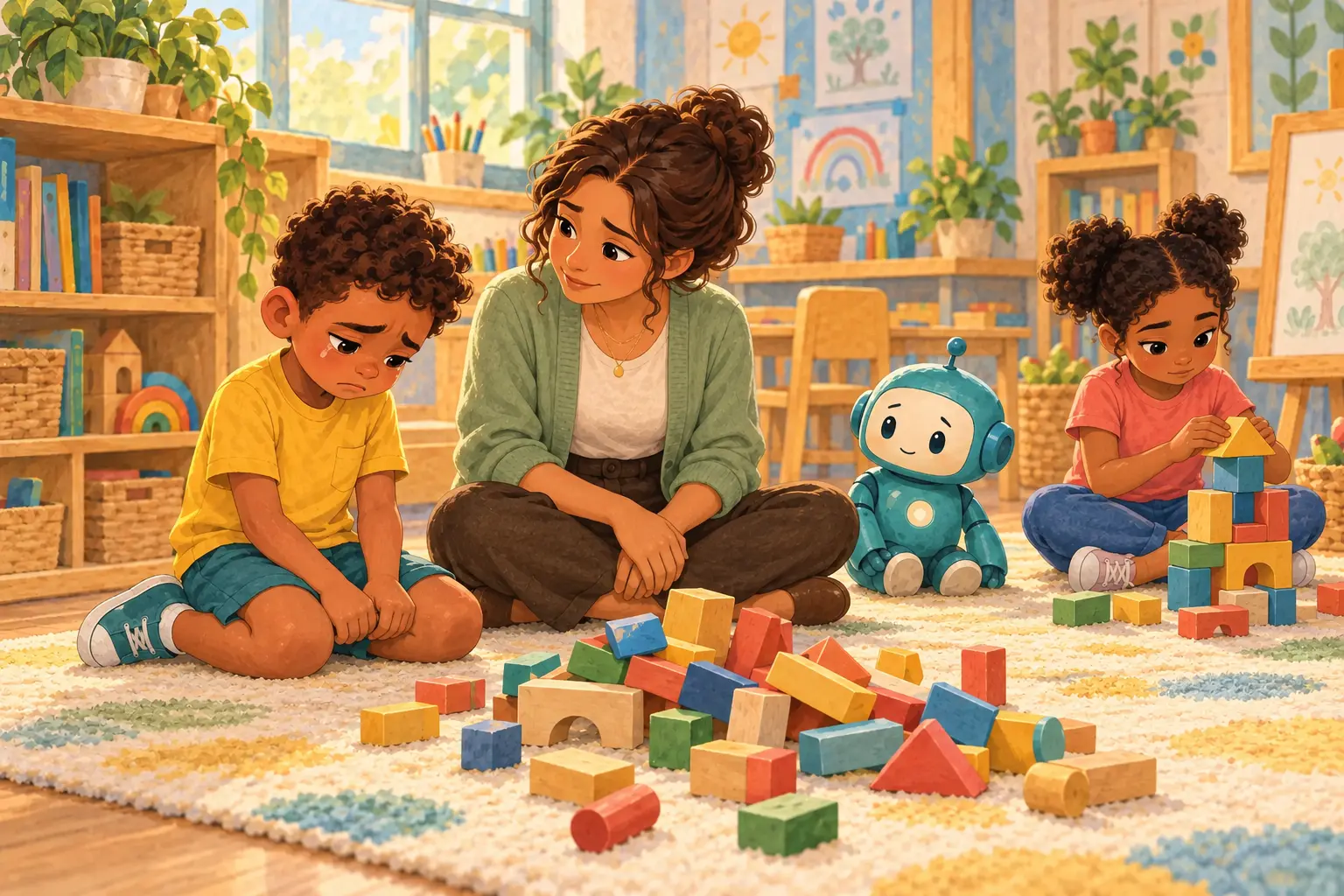
For a cancelled playdate: “You were hoping to see your friend. This change is hard.” After losing a game: “You wanted a different result. I can stay with you.” When a tower falls: “You put a lot into that. Would you like company or some space?” These are starting points, not magic phrases. A child may disagree with your guess, cry, remain quiet or need fewer words.
Keep a boundary without rejecting the feeling
Accepting disappointment does not mean allowing blocks to be thrown. Try “You can be upset. I will help keep people safe.” Put dangerous objects out of reach and remain available. Do not demand a hug or a smile before helping. If the adult is becoming overwhelmed, seek safe support rather than leaving a young child unsupervised.
Offer choices when your child is ready
Ask whether they want listening, help or a pause. If they want a next step, choose one small action: put the pieces in a tray, message the friend’s grown-up about another day, or finish the game for now. Avoid promises you cannot keep. An alternative activity can be welcome, but it need not be used to make the child stop feeling disappointed.
When an activity is not enough
A short conversation cannot solve every source of distress. Notice the situation, the support available and your child’s usual way of communicating. If distress is persistent, worsening, unsafe or disrupting everyday life, seek guidance from an appropriate qualified professional. The example phrases here are family learning prompts, not an assessment or treatment.
Try it together
Make a “hope and next step” drawing
- At a comfortable moment, fold paper into two spaces: “What I hoped for” and “What could help now.” Let your child draw instead of write.
- Model your own small disappointment first. Keep it age-appropriate and avoid adult financial or relationship worries.
- Offer “company,” “space” or “help” as possible next steps. Your child can choose none or suggest something else.
- Put the drawing away when the conversation is finished. It is not a scorecard or a requirement to feel better.
Explore the related story mission · More family guides
Sources and how this guide was made
Prepared for LifeQuest Kids with AI assistance and checked against the linked sources. The family examples and activities are original. No professional review, affiliation or endorsement is claimed. Published and sources accessed 1 October 2026.