Notice your own clues
Tight shoulders or watery eyes may be clues. They do not tell us exactly how someone feels; a child can describe what they notice.
Feelings & support · Ages 6–8
Milo’s tower tumbles, and he feels upset. In Oh No, My Tower!, children practice noticing their own body clues, trying a feeling word and asking a caring grown-up for company.
Play Oh No, My Tower!About 7 minutes · Free to try · Explore with a grown-up
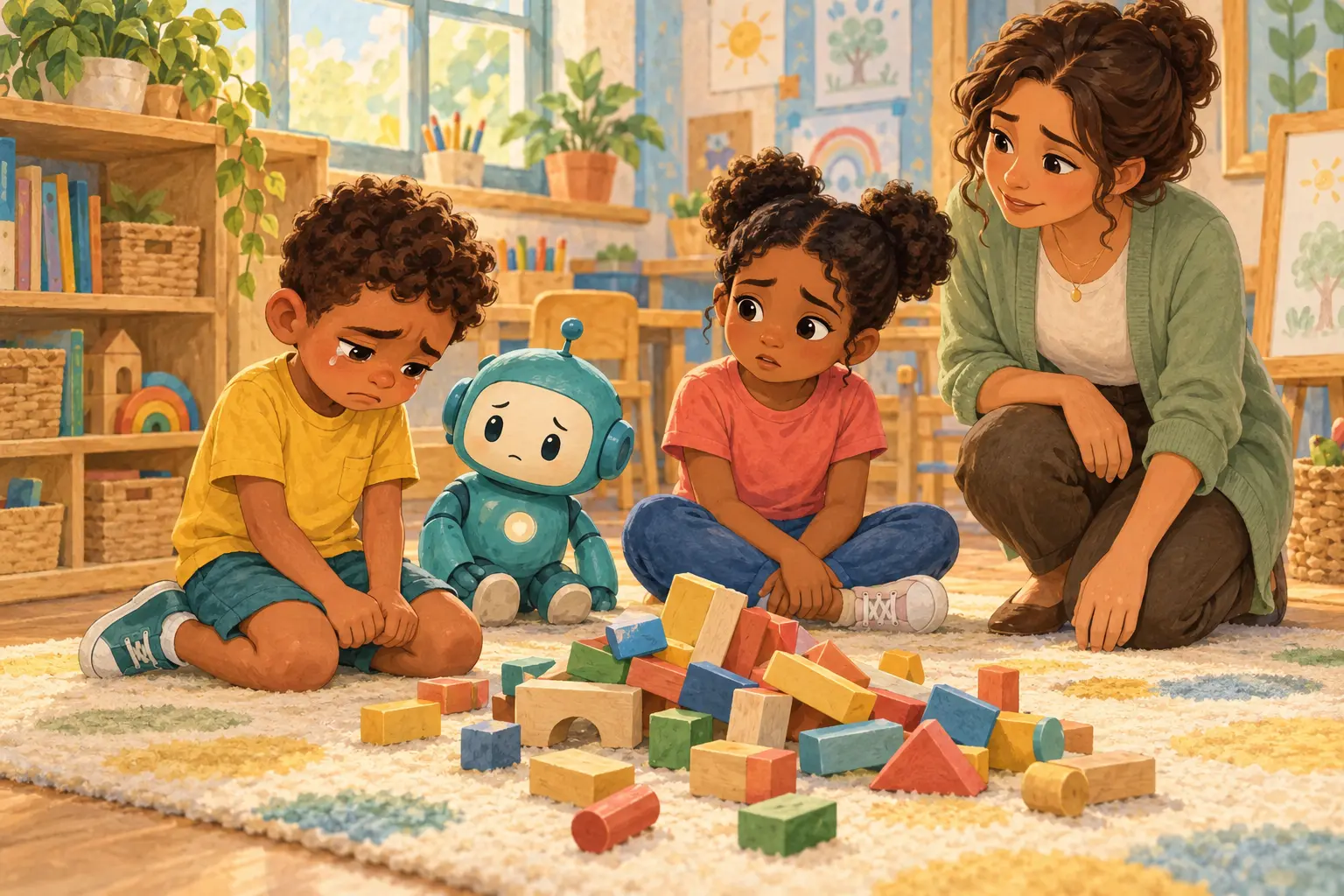
Inside the adventure
Tight shoulders or watery eyes may be clues. They do not tell us exactly how someone feels; a child can describe what they notice.
Sad, disappointed, angry—or more than one feeling. A child can point, draw or say “I’m not sure” rather than produce a perfect label.
Practice “Could you sit with me?” Support does not depend on smiling or hiding an uncomfortable feeling.
Try it away from the screen
Practice together at a comfortable moment. Your child can speak, point, draw or take a break.
Ask about feelings when your child is comfortable enough to talk. Avoid guessing a feeling as a fact, comparing siblings or requiring a cheerful answer. Your presence can be useful even without a long conversation.
Offer a picture, drawing or “not sure.” Noticing and asking for support are useful steps even without a specific word.
Feelings are experiences, not good or bad behavior. Adults can accept a feeling while helping children keep themselves and others safe.
The interactive mission offers English, Spanish and Japanese. Choose your language in the adventure map before starting. This guide is currently in English.
Follow Milo from noticing a feeling to taking a supported pause and making a new plan.
Start the story togetherRead the step-by-step guide and download free practice sheets.