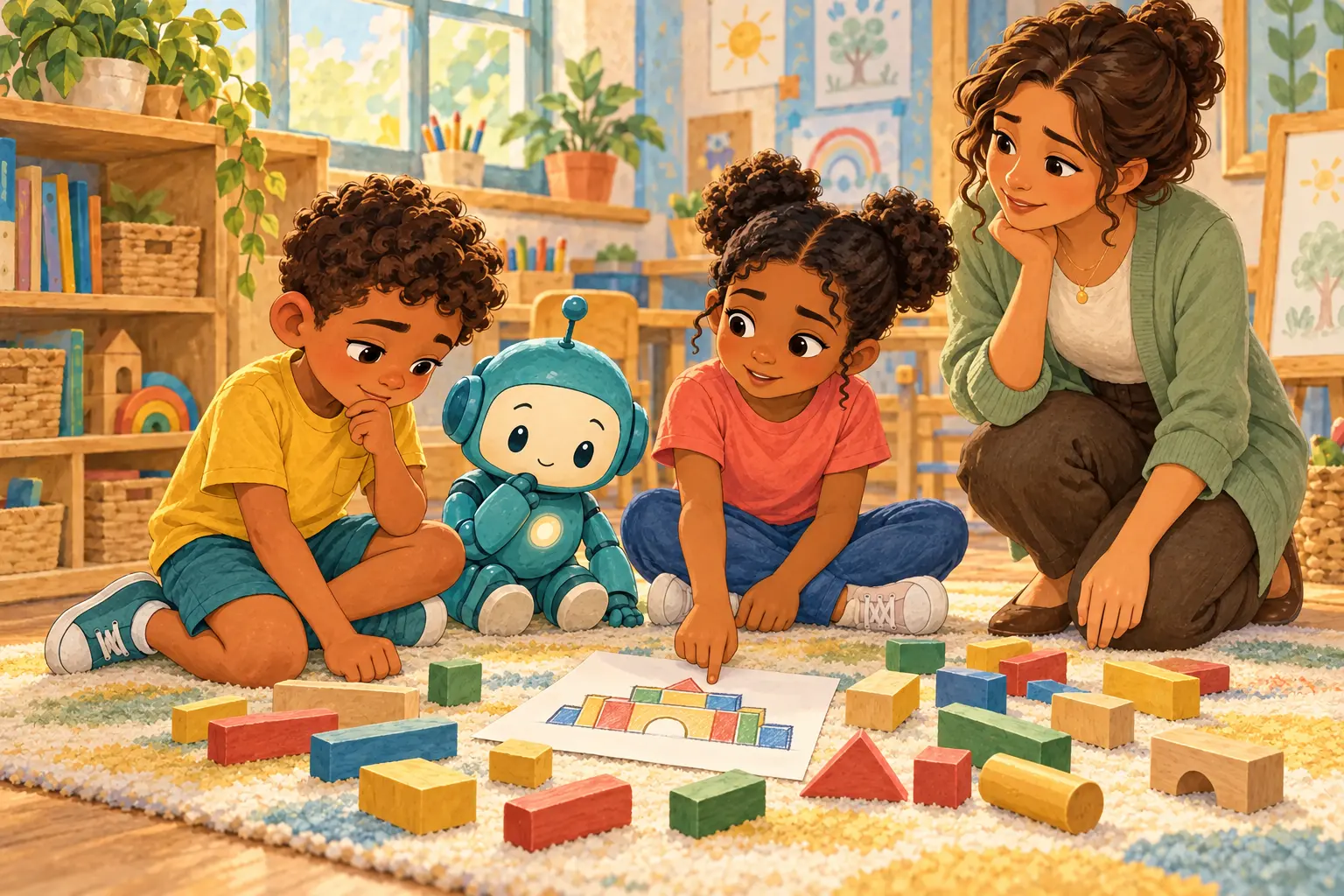
A pause can be part of learning
When a child gives up, the difficulty may involve tiredness, missing instructions, materials or a task that is too large. Do not assume a lack of effort. PBS KIDS discusses taking a break as part of approaching a challenge again. Begin by asking what would make the next step manageable, and accept that today may not be the right time.
Replace a general instruction with a small change
Instead of “Try harder,” offer a concrete possibility: “Could we test a wider base?” or “Would you like to start with two puzzle pieces?” Change one thing at a time so you can notice what happens. Let the child help choose the change. A smaller task is still real practice; it is not cheating or evidence of failure.
Make help easy to request
Practice “Could you show me the first step?” or “Can you hold this while I try?” Adults can demonstrate, simplify or work alongside a child. Do not insist that the child discover everything independently. If an activity repeatedly fails, reconsider the task and support instead of promising that more effort will always make it work.
Describe what happened without judging the child
Use observations such as “The wider blocks stayed steady longer” or “You asked for a demonstration.” Avoid turning persistence into an identity test: being a “good learner” should not depend on continuing when distressed. Ask what the child noticed. They may want to adjust, request help, rest or stop. All of those can be thoughtful decisions.
Keep the experiment within reach
Choose materials that are safe and a goal small enough for your child to explore. Avoid timed competitions if they make the experience tense. Do not compare siblings or film a difficult moment for an audience. A successful activity can be a useful conversation even when the tower falls again. Continuing later remains an option, not an obligation.
Try it together
Test one tower change together
- Build a low pretend home for two toy animals, with an adult nearby. Agree that the goal is to explore, not make the tallest tower.
- Choose one change, such as wider blocks at the bottom. Draw or point to the plan before starting.
- Try together and notice the result. Use “This side wobbles” instead of “You did it wrong.”
- Choose the next step: adjust one piece, ask for help, pause or finish. Let the child participate in that decision.
Explore the related story mission · More family guides
Sources and how this guide was made
Prepared for LifeQuest Kids with AI assistance and checked against the linked sources. The family examples and activities are original. No professional review, affiliation or endorsement is claimed. Published and sources accessed 1 October 2026.